Improving the KYC Onboarding Flow in the Remita Mobile App
Redesigned KYC onboarding in the Remita Mobile App

Role
Senior UX Designer – Led design strategy, directed user research, and managed cross-functional collaboration
Industry
Fintech – Digital Payments, Government Payments & Personal Finance (Nigeria)
Team
Product Manager, Engineering Lead, 2 Frontend Engineers, Compliance Officer, QA Lead, Data Analyst (SystemSpecs / Remita)
Duration
14 weeks (Discovery through Post-Launch Monitoring)
Tools
Figma, FigJam, Maze, Miro, Google Sheets
Overview
Remita is a financial services platform developed by SystemSpecs, one of Nigeria's longest-standing technology companies, headquartered in Lagos. Founded in 2003, Remita has served as the gateway for Nigeria's Treasury Single Account (TSA) since 2012 and is licensed by the Central Bank of Nigeria (CBN) as a Switch, Payment System Service Provider, Payment Terminal Service Provider, and Super-Agent. The platform processes over ₦100 trillion in annual transactions, powering salary payments, government revenue collection, bill payments, and personal finance services for millions of Nigerians.
As part of Remita's strategic initiative to launch a next-generation mobile app designed to bring multi-bank account management, esusu groups, recurring payments, and international transfers to a broader consumer audience, the company identified a critical bottleneck in its mobile onboarding funnel. Despite strong brand recognition in the government and enterprise space, Remita's mobile app was losing a substantial portion of new consumer users during the identity verification and KYC (Know Your Customer) stage, which the CBN mandates. At the time of this project, the mobile app had approximately 1.2 million registered users and was experiencing rapid growth driven by significant marketing investment.
As the Senior UX Designer at SystemSpecs, I was brought in to lead the redesign of the KYC onboarding flow for the Remita mobile app. My responsibilities included defining the research strategy, synthesising insights into a design direction, leading ideation workshops, creating and testing prototypes, and collaborating closely with engineering and compliance to deliver a solution that balanced CBN regulatory requirements with a frictionless user experience.
Problem Statement & Opportunity
The Challenge
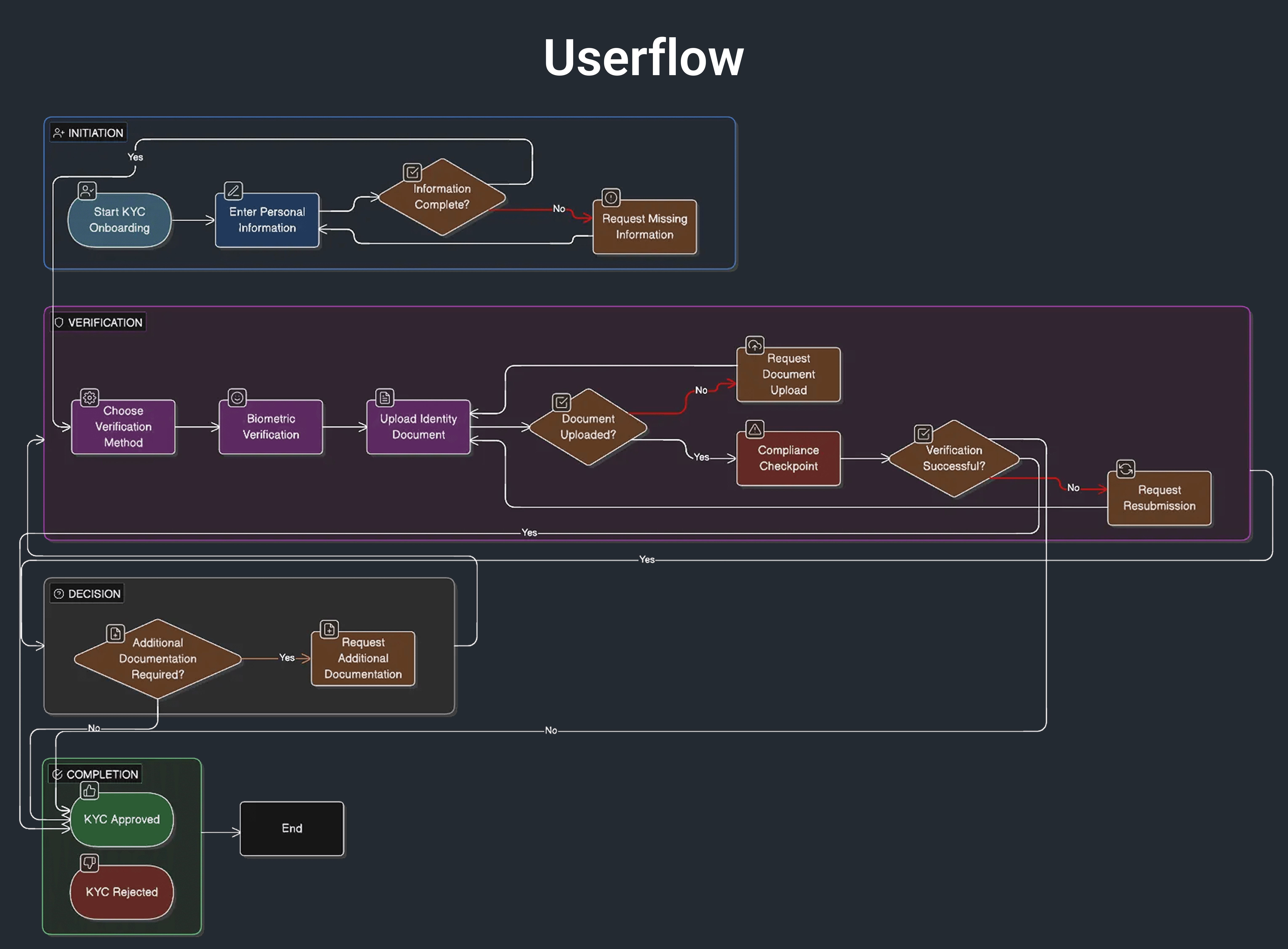
The existing KYC onboarding flow in the Remita mobile app was a single, monolithic process that required users to complete all identity verification steps, including BVN (Bank Verification Number) validation, NIN (National Identification Number) linkage, document upload, and selfie capture, before they could access any functionality within the app. The flow consisted of a long, multi-field form spread across several screens, with no ability to save progress, no clear indication of how long the process would take, and minimal feedback when errors occurred.
The data told a stark story. The onboarding funnel showed a 68% drop-off rate at the KYC stage, meaning that more than two-thirds of users who began the identity verification process abandoned it before completion. This figure was consistent with broader industry trends, according to a 2022 report by Signicat: the average onboarding drop-off rate in fintech is approximately 63%, with billions lost annually to incomplete onboarding processes. However, Remita's rate was notably higher than the industry average, suggesting that the specific implementation was creating unnecessary friction.
Why It Mattered
The business impact was significant. With a customer acquisition cost (CAC) of approximately ₦53,000 per user, Remita was effectively wasting over ₦42 billion annually on users who never completed onboarding. Beyond the direct financial loss, the high drop-off rate was damaging Remita's consumer brand perception. App store reviews frequently cited the "painful" and "confusing" sign-up process as a reason for low ratings. The Remita app's average rating had dropped to 3.2 stars, with 23% of negative reviews specifically mentioning the verification process. This was particularly concerning given that Remita's enterprise and government reputation was built on reliability and trust, a disconnect that risked undermining the brand's expansion into the consumer market.
From a strategic perspective, Remita was preparing to expand its consumer services across West Africa through its PAPSS (Pan-African Payment and Settlement System) integration and launch a premium tier for its next-generation mobile app. Both initiatives depended on a high-converting onboarding funnel. Reducing the KYC drop-off rate was not merely a UX improvement; it was a prerequisite for the company's growth strategy.
Initial Assumptions
Before beginning research, the team held several assumptions about the problem. We assumed that users were dropping off primarily because the form was too long. We also assumed that the BVN/NIN validation step was the primary friction point, and that younger users (18–25) were more likely to abandon than older users. As the research would reveal, some of these assumptions were correct, but others were significantly off the mark.
Success Metrics & KPIs
Before beginning the design process, I worked with the Product Manager and Data Analyst to define clear success criteria. We established both leading indicators that would signal early progress and lagging indicators that would measure final outcomes.
Metric | Baseline | Target | Type |
KYC completion rate | 32% | 60%+ | Primary / Lagging |
Average time to complete KYC | 7.2 minutes | Under 3 minutes | Primary / Leading |
Document upload success rate (first attempt) | 41% | 75%+ | Secondary / Leading |
Support tickets related to onboarding | 1,840/month | Reduce by 50% | Secondary / Lagging |
App store rating | 3.2 stars | 4.0+ stars | Tertiary / Lagging |
User satisfaction (post-onboarding CSAT) | 2.8/5 | 4.0+/5 | Secondary / Lagging |
Research & Discovery
Research Methodology & Rationale
I designed a multi-method research program to answer three strategic questions:
Where exactly are users dropping off, and what triggers abandonment?
What are users' emotional and cognitive states during the verification process?
How do competitors handle the same CBN regulatory requirements with less friction?
The research program consisted of four complementary methods, each chosen for a specific purpose.
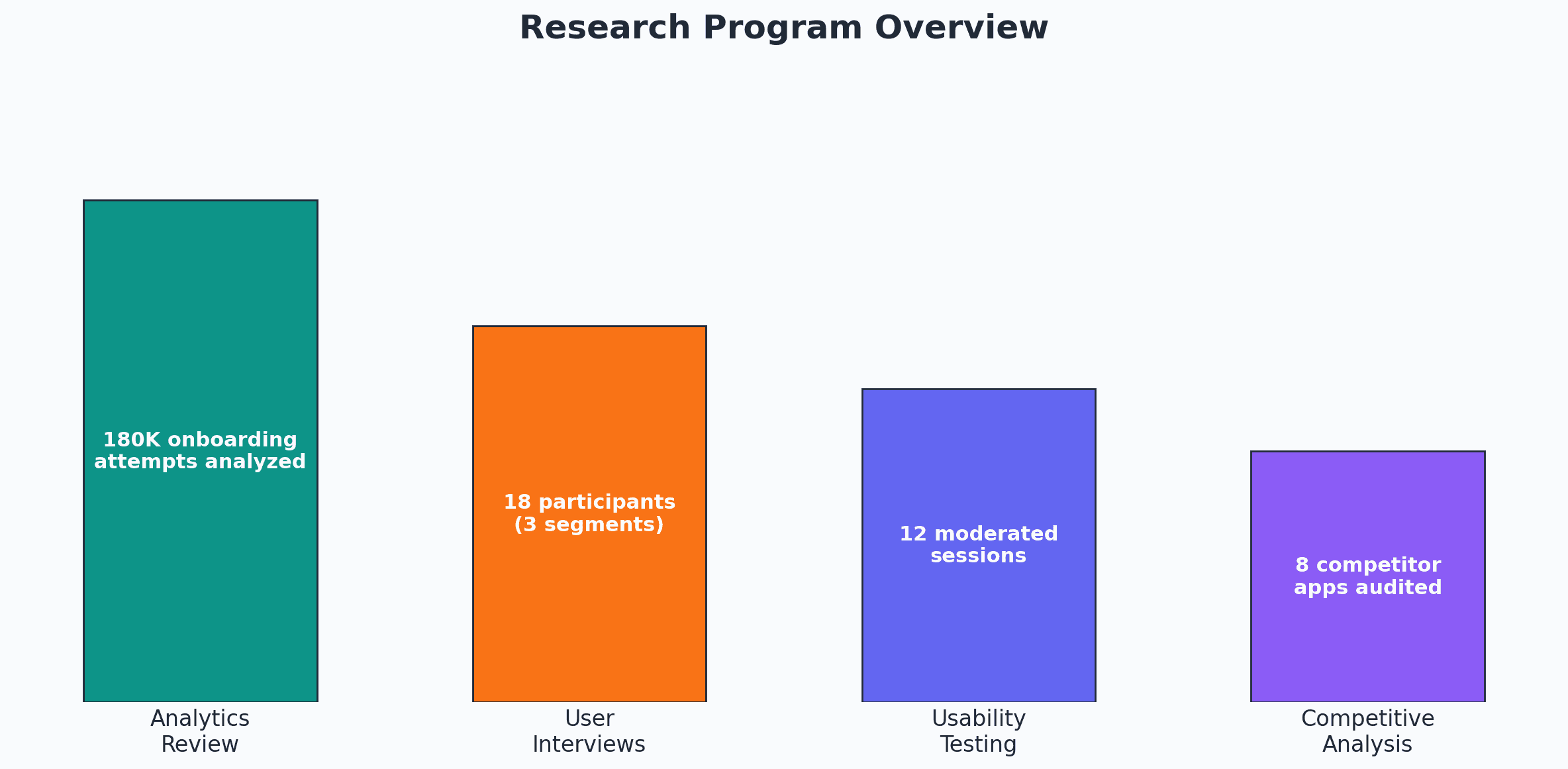
Quantitative Analytics Review: I partnered with the Data Analyst to conduct a deep dive into the existing onboarding funnel data. We analyzed 90 days of behavioral data covering approximately 180,000 onboarding attempts. This analysis identified the precise screens where users abandoned, the time spent on each step, error rates by field, and device-specific patterns. The quantitative data gave us the "what" where users were struggling, but not the "why."
User Interviews: To understand the emotional and cognitive dimensions of the problem, I conducted 18 semi-structured interviews with three user segments: users who completed KYC successfully (6 participants), users who abandoned during KYC (8 participants), and users who abandoned and switched to a competitor (4 participants). Interviews lasted 45–60 minutes and were conducted remotely via video call. I specifically chose to include users who had switched to competitors because their comparative perspective would reveal what our competitors were doing better.
Usability Testing of the Existing Flow: I ran moderated usability tests with 12 participants who had never used the app. Each participant was asked to complete the full onboarding process while thinking aloud. Sessions were recorded and analyzed for task completion, error frequency, emotional responses, and moments of confusion.
Competitive Analysis: I conducted a structured analysis of 8 competing Nigerian fintech apps (including OPay, PalmPay, Kuda, and Moniepoint, several of which Remita also partners with through its agent network), evaluating their KYC flows across 15 dimensions, including number of steps, time to complete, error handling, progress indication, trust signals, and save-and-resume capability.
Key Insights & Discoveries
The research revealed several critical insights that fundamentally shaped the design direction. Rather than a single "fix," the findings pointed to a systemic problem with how the entire verification experience was structured.
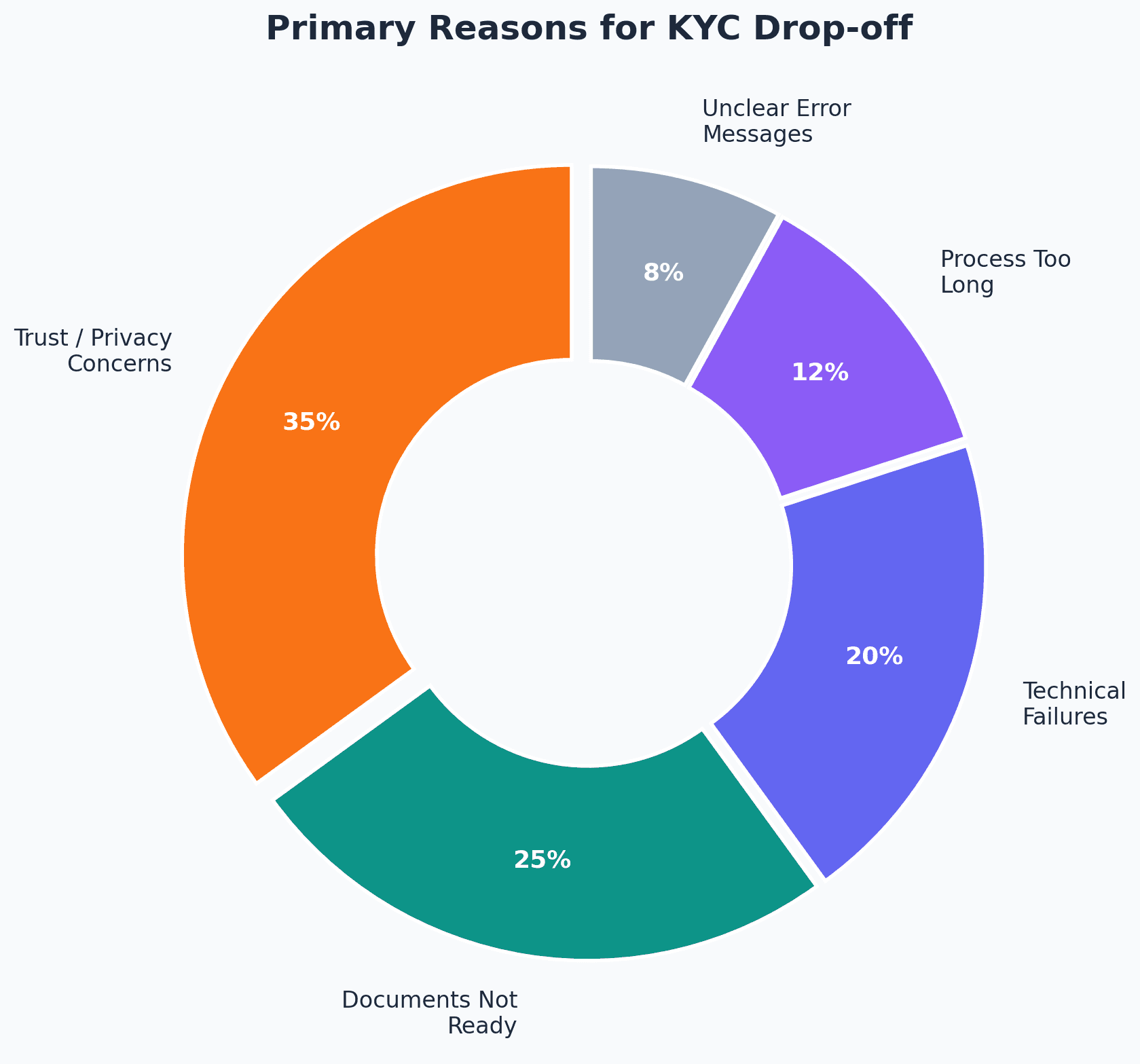
Insight 1: Trust Deficit, Not Form Length, Was the Primary Barrier. While the team had assumed that form length was the main driver of abandonment, the research revealed that trust was the more fundamental issue. During interviews, 14 of 18 participants expressed anxiety about sharing sensitive personal documents, particularly BVN and NIN details, with the Remita mobile app, which many consumer users were encountering for the first time despite Remita's established reputation in government payments. Users who abandoned frequently cited concerns such as "I didn't know what they were going to do with my BVN" and "It felt like a scam asking for so much information upfront." The app provided no explanation of why each piece of information was needed, no indication of how data would be protected, and no trust signals such as Remita's CBN licensing credentials, SystemSpecs' track record, or encryption badges, despite the company having some of the strongest regulatory credentials in Nigeria's fintech ecosystem.
Insight 2: The "All-or-Nothing" Structure Created Unnecessary Pressure. The existing flow required users to complete all verification steps in a single session. If a user did not have their NIN slip or a valid government-issued ID readily available, they had no option to save progress and return later. Analytics showed that 34% of users who abandoned did so within 15 seconds of seeing the document upload screen, suggesting they were not prepared with the required documents, rather than unwilling to provide them. The lack of a save-and-resume capability was converting a timing problem into a permanent loss.
Insight 3: Document Upload Was a Technical Failure, Not a UX Failure. The document upload step had a 59% first-attempt failure rate. Usability testing revealed that the primary causes were poor camera guidance (users did not know how to frame their National ID card or International Passport), insufficient lighting detection (blurry photos were accepted and then rejected later by the verification system), and confusing error messages that said "Document rejected" without explaining what went wrong or how to fix it. Users experienced an average of 2.4 upload attempts before success, with each failure eroding confidence and increasing abandonment risk.
Insight 4: Users Had Different Verification Readiness Levels. The research revealed three distinct user segments with different needs and readiness levels. "Ready Now" users (approximately 30%) had all documents available and wanted to complete verification quickly. "Need Time" users (approximately 45%) were interested in the app but did not have documents immediately available. "Skeptical" users (approximately 25%) needed to build trust with the app before sharing sensitive information like their BVN.
User Journey Map & flows
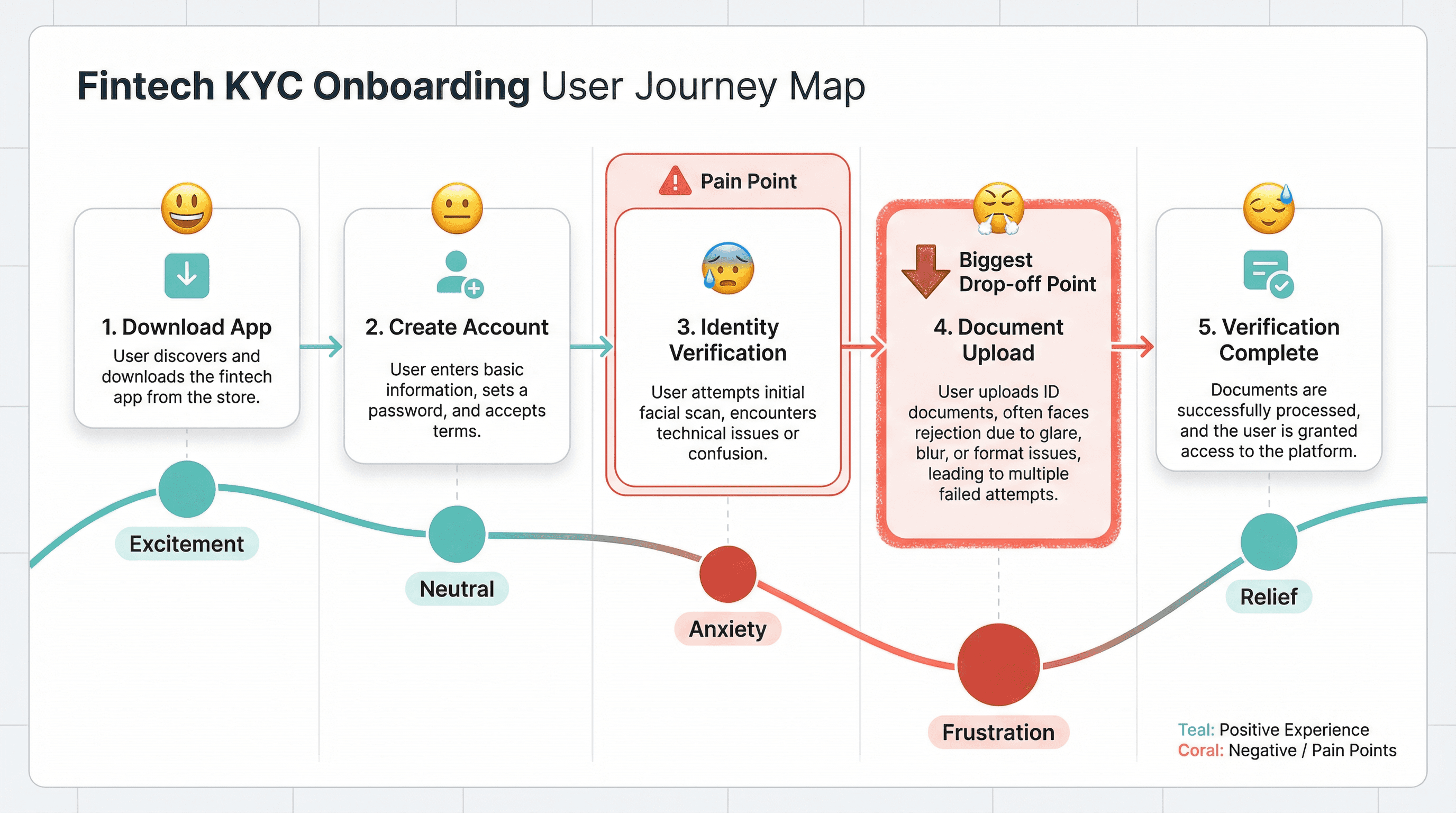
The journey map below visualises the emotional trajectory users experienced during the existing onboarding process. The dramatic dip at the identity verification and document upload stages highlights the critical pain points that drove abandonment.
User Personas
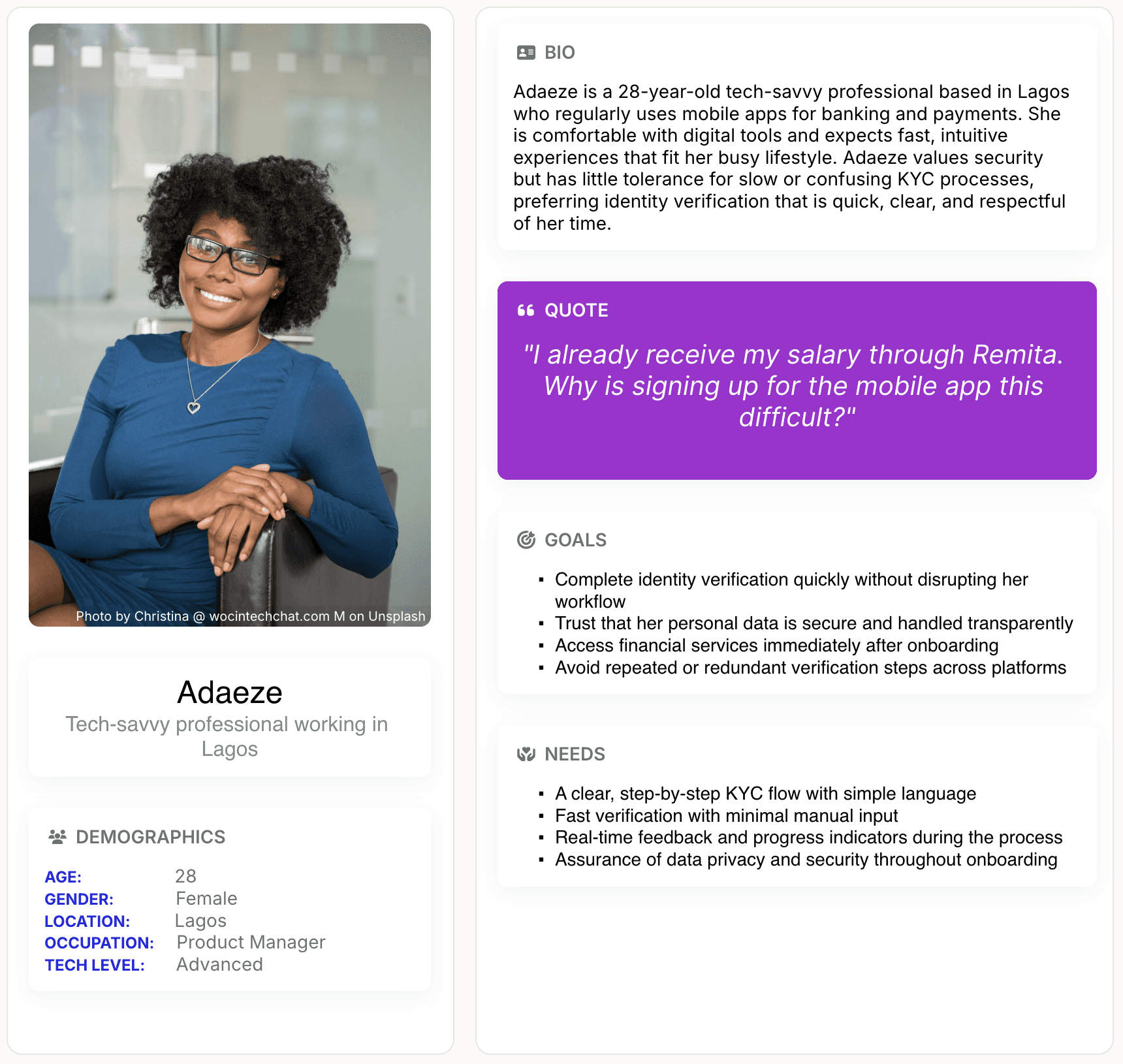
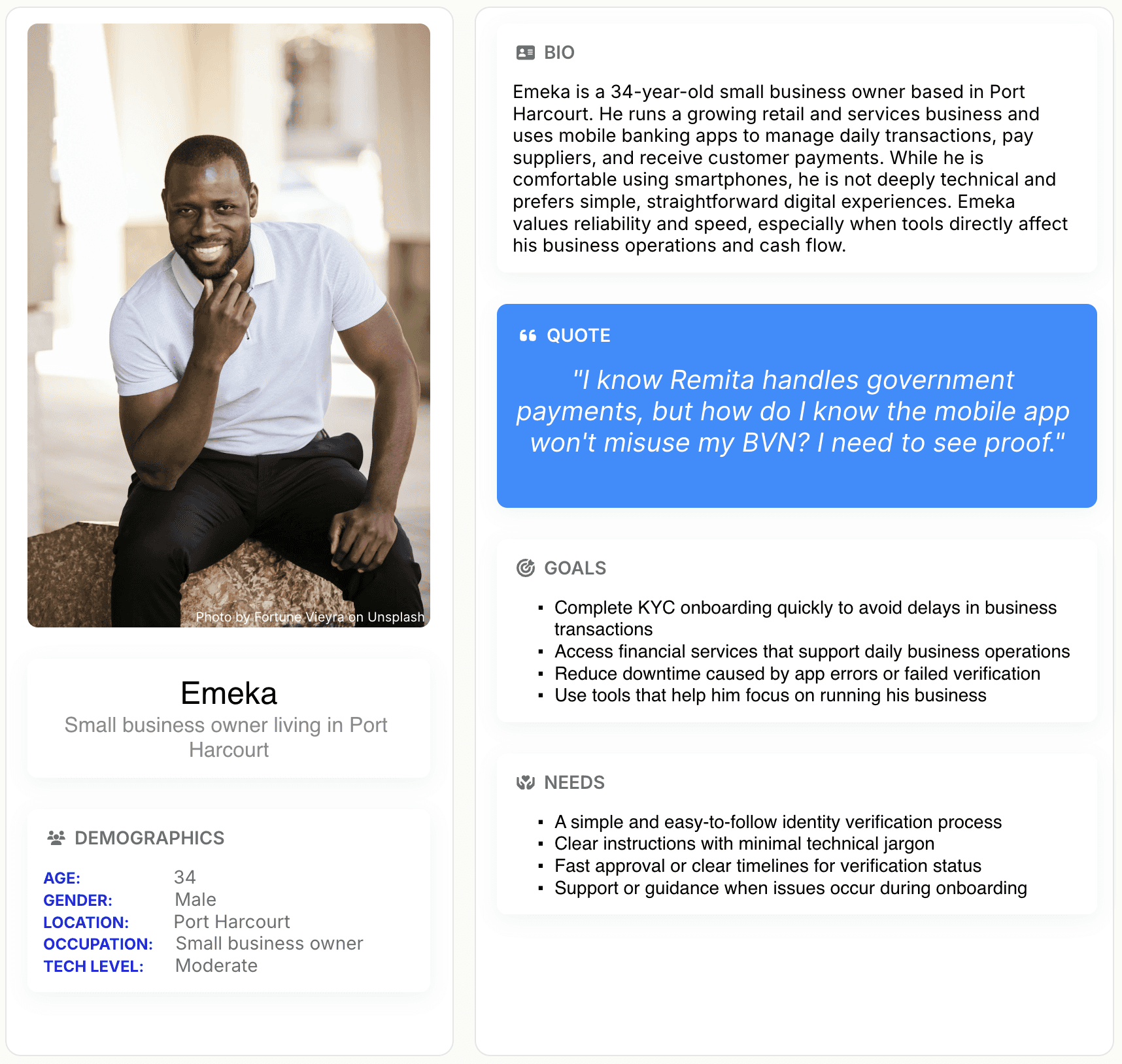
Based on the research, I developed two primary personas that represented the distinct user segments identified. These personas grounded all subsequent design decisions in real user needs and behaviours.
Adaeze, 28 - Product Manager
Emeka, 34 - Small Business Owner
Strategic Direction & Design Vision
Strategic Framework
Based on the research findings, I developed a strategic framework built around four core design principles that would guide every design decision throughout the project.
Principle 1: Trust Before Ask. Before requesting sensitive information like BVN or NIN, the design must leverage Remita's existing credibility, its CBN licensing, SystemSpecs' 30+ year track record, and its role as Nigeria's TSA gateway, through visible trust signals, transparency, and clear explanations of why each piece of information is needed and how it will be protected.
Principle 2: Progressive Commitment. Rather than requiring full verification upfront, the design should allow users to engage with the app at increasing levels of trust and commitment. Users should be able to explore basic features before completing full verification, creating a natural progression from curiosity to commitment.
Principle 3: Guided Success. Every step of the verification process should be designed to maximize the likelihood of first-attempt success. This means providing real-time guidance, clear error prevention, and actionable feedback when issues occur.
Principle 4: Respect the User's Context. The design must accommodate different user contexts, whether they are at home with documents ready, on a bus in Lagos traffic, or at a market in Aba. Save-and-resume capability, flexible document options, and contextual reminders should ensure that timing and location never become barriers to completion.
Competitive & Contextual Analysis
The competitive analysis of 8 Nigerian fintech apps revealed significant variation in how KYC was handled.
Feature | Remita (Before) | Top Competitors (Average) | Best in Class |
Steps in KYC flow | 8 screens | 4–5 screens | 3 screens |
Progress indicator | None | Basic progress bar | Step-by-step with time estimate |
Save & resume | Not available | Available in 5 of 8 apps | Auto-save with push notification reminder |
Document guidance | Static text instructions | Overlay frame guide | Real-time edge detection with feedback |
Trust signals | None | Privacy policy link | CBN license badge + encryption info + data usage explanation |
Tiered access | No (all-or-nothing) | Partial in 3 of 8 apps | Full tiered access with progressive verification |
Error handling | Generic "rejected" message | Specific error + retry | Real-time validation with guided correction |
Design Process & Execution
Ideation & Concept Development
I facilitated a two-day design workshop with the cross-functional team to generate and evaluate design concepts. We explored three distinct concept directions:
Concept A: "The Express Lane" focused on speed, reducing the KYC flow to the absolute minimum steps with auto-detection and OCR pre-filling. The trade-off was minimal trust-building and no tiered access.
Concept B: "The Trust Builder" prioritised trust and transparency with detailed explanations, CBN certifications, and a "why we need this" tooltip for every field. It added more screens to accommodate explanatory content.
Concept C: "The Smart Guide" combined elements of both, a tiered verification structure with contextual trust signals that appeared based on user behaviour, real-time document guidance, and save-and-resume capability.
Concept C was selected because it best balanced the competing needs of speed (for Adaeze) and trust (for Emeka). The Compliance Officer confirmed that a tiered approach was permissible under CBN's tiered KYC framework.
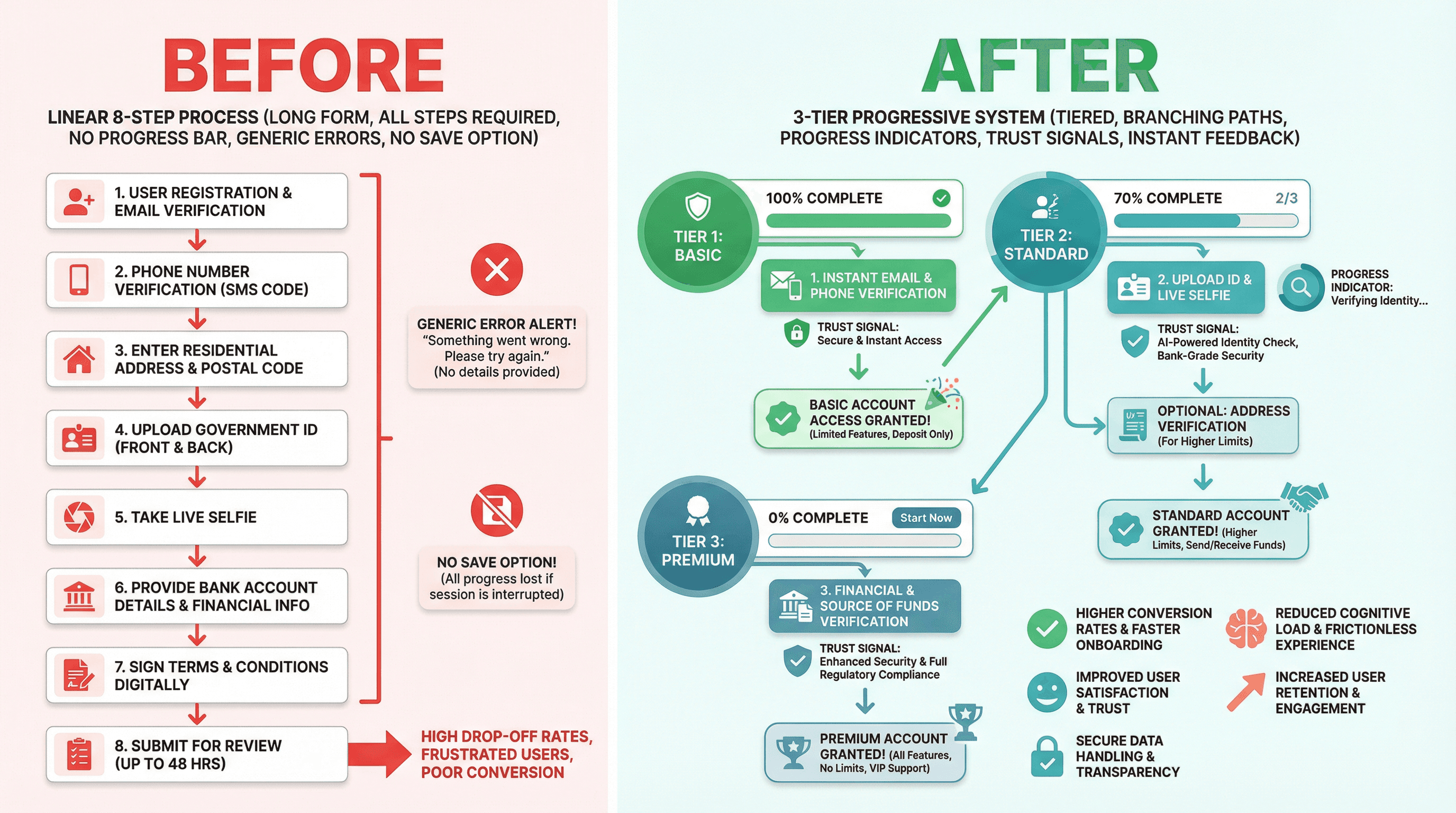
Before vs After: Flow Comparison
The most significant structural change was the introduction of a three-tier verification system aligned with CBN's tiered KYC guidelines. The diagram below illustrates the transformation from the original linear 8-step process to the new progressive 3-tier system.
Tiered Verification Architecture
Tier | Access Level | Requirements | User Value |
Tier 1: Basic | Browse features, set up profile, view rates, receive money (up to ₦50,000) | Email verification + phone number + BVN | Immediate access to explore the app; builds familiarity and trust |
Tier 2: Standard | Send/receive up to ₦500,000/month, bill payments, airtime purchase | Government ID upload (NIN slip, Voter's Card, or International Passport) + selfie verification | Access to core features; most users' primary use case |
Tier 3: Premium | Unlimited transactions, premium features, international transfers | Proof of address + enhanced due diligence | Full access for power users and high-value customers |
This tiered structure meant that users could begin using the app immediately after Tier 1 (which took under 60 seconds) and complete higher tiers at their own pace. The design included contextual prompts that encouraged users to upgrade their verification level when they attempted to access features that required it, creating a natural, motivated moment for verification rather than an arbitrary gate.
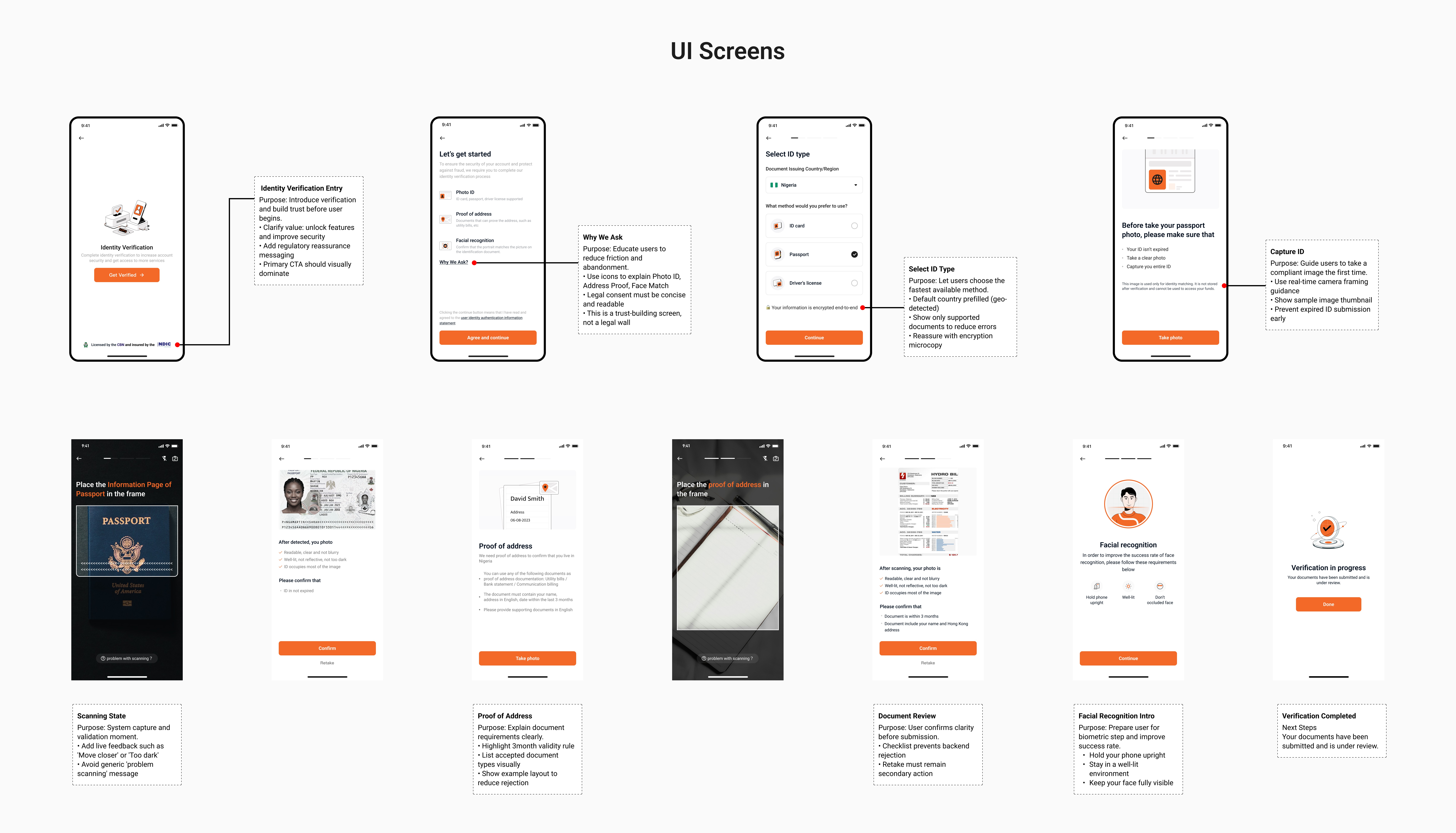
Document Capture Redesign
The document capture screen was completely reimagined. Instead of a simple "Upload" button, the new design included a live camera viewfinder with an overlay frame showing exactly where to position the document. Real-time feedback indicators showed whether the lighting was sufficient, whether the document was properly aligned, and whether the image was in focus. If any condition was not met, the system displayed specific, actionable guidance (e.g., "Move to a brighter area" or "Hold your phone steady") rather than allowing the user to capture a poor image that would be rejected later.
Trust Signal System
I designed a layered trust signal system with three levels of reassurance that leveraged Remita's unique position in Nigeria's financial ecosystem. At the global level, a persistent "CBN Licensed" badge, the SystemSpecs logo, and a "Trusted by the Federal Government of Nigeria" indicator appeared in the header, drawing on Remita's role as the TSA gateway. At the step level, each verification step included a brief, plain-language explanation of why the information was needed (e.g., "We verify your BVN to protect your account and comply with CBN regulations, the same security standards we use for government payments"). At the interaction level, micro-animations showed data being "locked" after submission, reinforcing the sense of security.
Cross-Functional Collaboration
A critical moment of collaboration occurred when the Compliance Officer at SystemSpecs initially rejected the tiered verification concept, citing concerns about CBN regulatory risk, understandable given Remita's high-profile role as the government's payment gateway. Rather than accepting this as a final decision, I worked with the Compliance Officer to map the specific CBN requirements for each transaction tier and demonstrated that a tiered approach actually improved compliance by ensuring that verification levels were proportional to risk levels, aligning with CBN's own tiered KYC framework. I also presented data showing that the current all-or-nothing approach was actually creating compliance gaps, as unverified users were abandoning Remita entirely and using less-regulated alternatives. This reframing, from "less verification" to "smarter verification" secured approval for the tiered structure.